
Results of municipal heat planning
Here you can find the results of municipal heat planning in Mainz.
Results of the inventory and potential analysis of municipal heat planning
The first two steps of municipal heat planning have been successfully completed. The inventory and potential analyses provide important insights for planning a climate-friendly heat supply in Mainz.
Below you will find the detailed interim report and a brief summary of municipal heat planning in Mainz.

Inventory analysis
The inventory analysis shows the current state of heat supply. The following key findings were identified:
- High proportion of fossil fuels: 75% of final energy consumption is covered by natural gas, with heating oil playing a minor role at 3%.
- Heat networks already established: 20% of heat consumption is covered by local or district heating, which is increasingly being decarbonized.
- Renewable energies: Biomass and heat pumps each account for only about 1%.
- Sectoral distribution: Residential consumption accounts for 62% of heat energy, commercial/industrial consumption for 28%, and public buildings for 11%.

The analysis was carried out at the building block level. This means that connected buildings were considered together and thus anonymized. Data sources included Mainz public utilities, information from chimney sweeps, and the Mainz city administration.
Potential analysis
The potential analysis identifies major opportunities for the heat transition in Mainz. The following potentials were examined and evaluated:
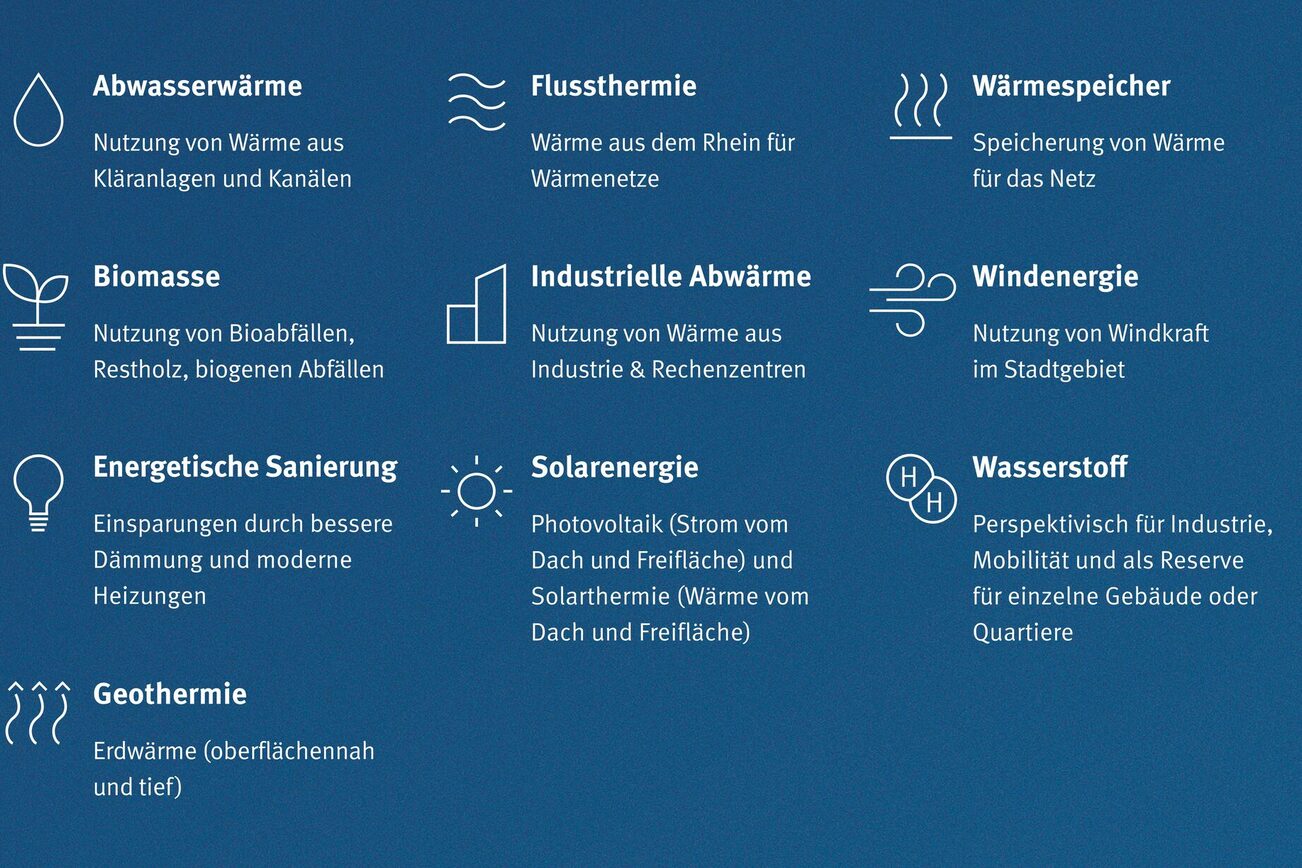
The following technologies have particularly high potential:
- Wastewater treatment plant: Heat recovery from the effluent of the wastewater treatment plant.
- Solar energy: Plenty of space for photovoltaics and solar thermal energy on roofs and open spaces.
- Geothermal energy and heat pumps: Good opportunities, especially in new development areas and renovated houses.
- Waste heat: Industry and data centers can feed heat into networks.
- Energy-efficient renovation: Lower energy consumption through better insulation and modern heating systems.
The potential has been assessed both theoretically and technically and will now be examined in more detail in further steps to determine its feasibility.
Next steps: The results are now being incorporated into scenario development. This involves developing concrete ways to achieve climate-neutral heat supply by 2035 and 2045, respectively.