Chronicle of disaster protection
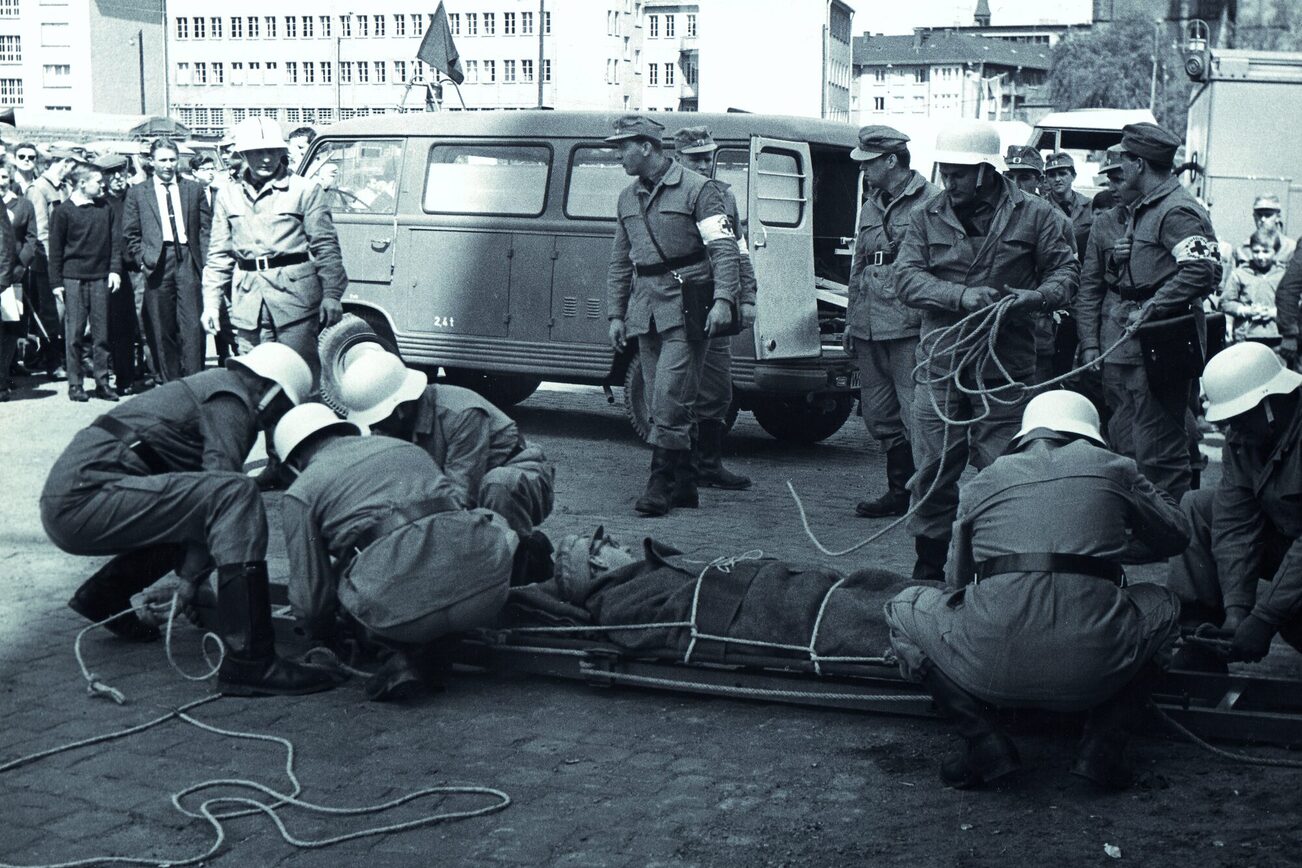
After the legal basis was established at the end of the 1950s by the Law on Measures for the Protection of the Civilian Population and various administrative regulations, the city of Mainz began setting up the so-called Air Raid Protection Service in 1961, which was integrated into disaster control seven years later.
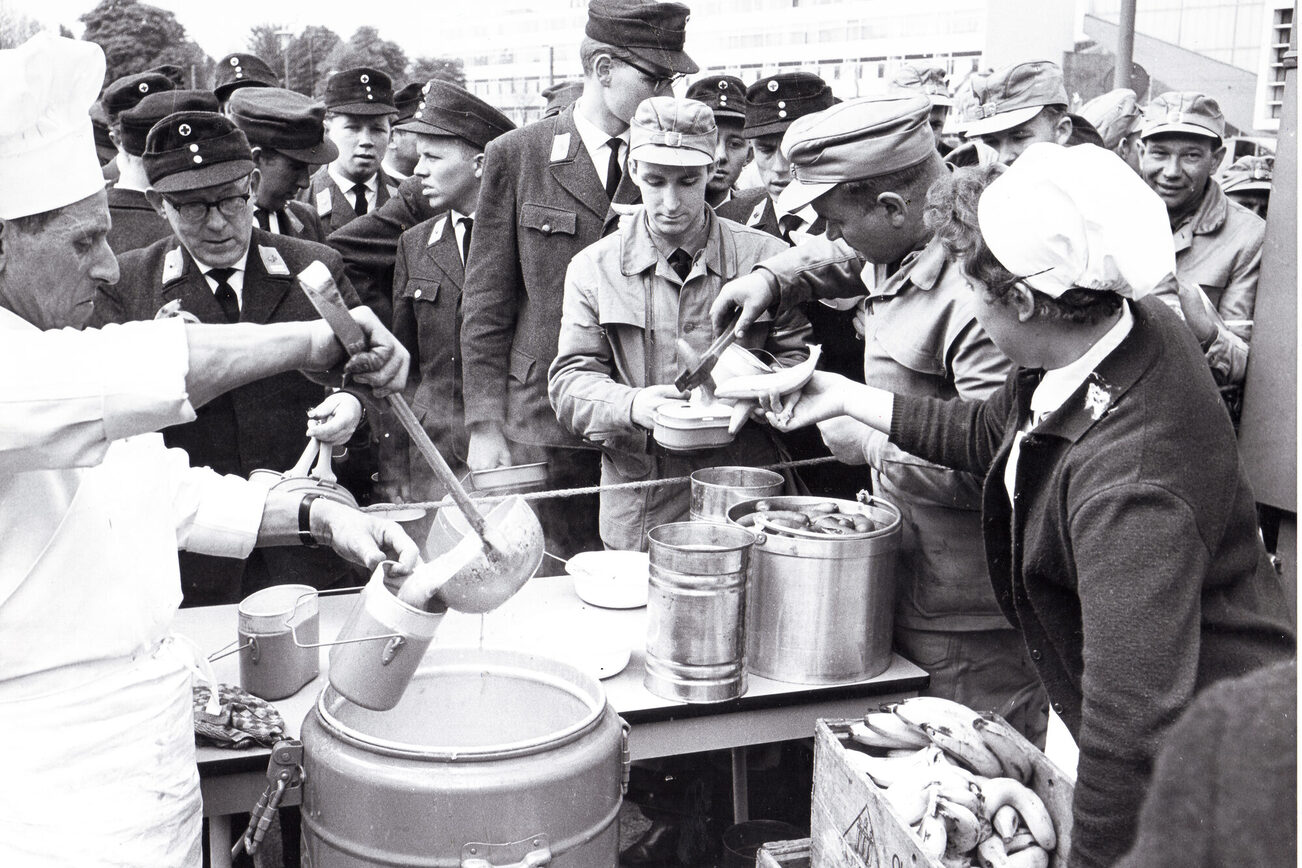
Over the past 50 years, civil protection and disaster control have undergone constant change due to technical developments, political and structural changes, and, last but not least, financial reasons. The measures taken to protect the population of Mainz have had to be adapted accordingly time and again.
The focus was and remains on the aid organizations with their full-time staff, but especially their many volunteers, who have put in countless hours for missions, training, and exercises, and continue to do so today.
Further development and changes in civil protection and disaster control
60s

Mainz was one of the cities in the Federal Republic of Germany where units of the Air Raid Protection Service (LSHD) were established in the early 1960s on behalf of the federal government. The reason for this was a high level of danger.
The concept was exclusively geared toward protecting the population in the event of a defense situation and initially aimed to recruit 1.5% (later 1%) of Mainz's population as helpers. Recruitment began as early as 1961, but it became apparent that enormous efforts were necessary to get even a fraction of the target number of helpers to commit to the program. It took another 4 to 5 years before the first of a total of 24 LSHD emergency vehicles for firefighting, rescue, and medical services were delivered by the federal government.
At the same time, work began on installing civil defense sirens, whose primary purpose was to warn the population of the dangers of armed conflict. For many years, however, they were also used by the fire department to alert its units.
The shortage of helpers nationwide and scarce public funds led to the implementation of the first reorganization of civil defense and peacetime disaster control with the 1968 Act on the Expansion of Disaster Control. The air raid protection service units were disbanded and integrated into existing organizations. This consolidated the dual-track assistance system (federal government on the one hand, state and local authorities on the other) and created a system of mutual support. Although the content has changed, this system is still in place today.
70s
In Mainz, in addition to the fire department and the Federal Agency for Technical Relief, which are required to do so by law, all private aid organizations (Workers' Samaritan Federation, German Life Saving Association, German Red Cross, Johanniter Accident Assistance, Maltese Relief Service) are also involved in disaster control. In addition, three government units were formed in the areas of telecommunications, utilities, and NBC services.
The structures of the KatS units at that time were specified by the federal government, as were regulations on training, equipment, etc.
The newly created opportunity to commit to working in disaster control and to be exempted from basic military or civilian service in return brought the aid organizations a large number of new volunteers.
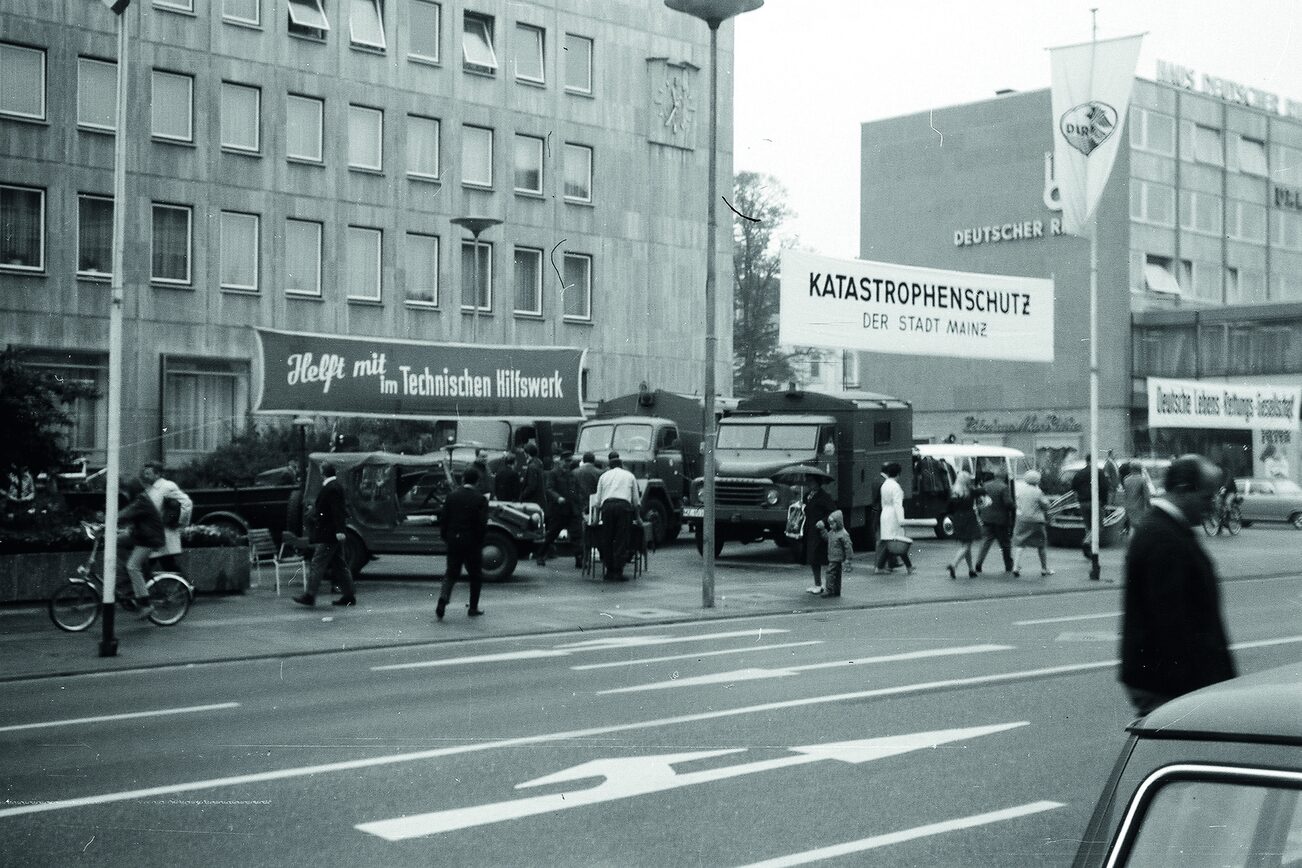
Advertising for self-protection, also part of civil defense, was intensified. The city was able to call on the staff of the Federal Association for Self-Protection to provide information and training to the population. Every year, 2,000 to 3,000 people were trained free of charge to be able to take initial measures in the event of a fire or to provide first aid, for example.
The implementation of emergency drinking water supply measures was also stepped up during these years. A total of 16 emergency drinking water wells were built in Mainz at the expense of the federal government.
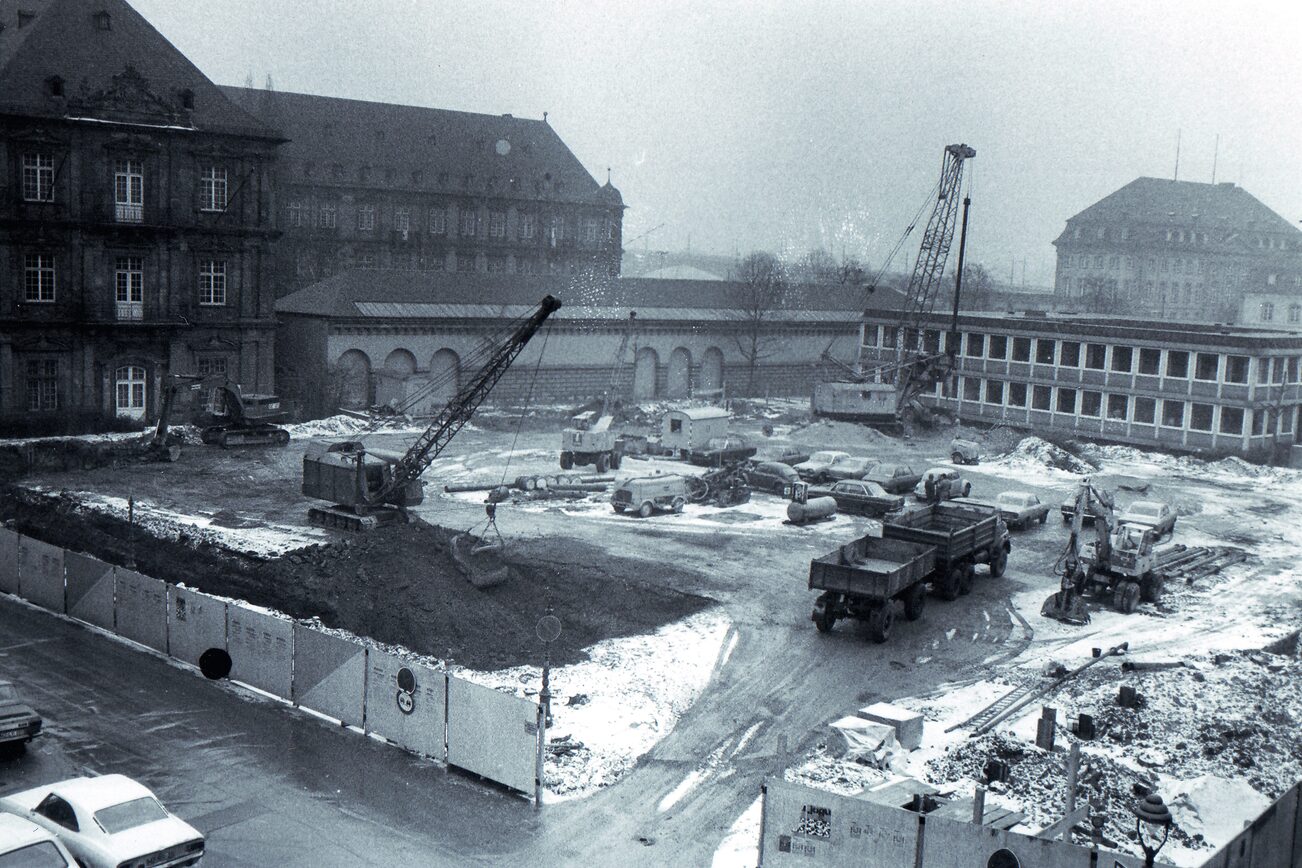
Also in 1972, with federal funding, the first shelter was built between the Electoral Palace and the Ministry of Justice and inaugurated in 1974. Like all later facilities, it is used as an underground car park in everyday life.
In the 1970s, there were several major flood operations, particularly in February 1970, as well as flooding caused by severe storms, which particularly affected the Laubenheim district in July 1970 and May 1973.
80s

All specialist services had access to extensive volunteer resources for disaster control. Between 800 and 900 volunteers from all organizations were distributed across the following specialist services:
- Fire protection service (professional fire department and 11 volunteer fire departments)
- Rescue service (THW and Hechtsheim volunteer fire department)
- Repair service (THW)
- Medical service (ASB, DRK, JUH, MHD)
- Care service (DRK, later also DLRG)
- ABC service and chemical and radiation protection group (fire department)
- Supply service (DRK, THW, control unit)
- Telecommunications service (control unit)
- Shelter service (control unit)
- ABC reporting and evaluation center (control unit)
- Observation and ABC measurement center (control unit)
In addition to the vehicles, equipment, and supplies available to the organizations, the federal government supported the municipalities with extensive equipment and numerous vehicles as part of its expanded disaster control measures. In the 1980s, a total of 33 federal vehicles were available for disaster control in Mainz.
The training and personal equipment of the helpers were also financed by the federal government.
On January 1, 1982, the new state law on fire protection, general assistance, and disaster control (LBKG) came into force in Rhineland-Palatinate. Unlike previous laws, it contained not only regulations on fire protection and technical assistance (from 1982: general assistance), but also on disaster control. The LBKG has been amended several times in the meantime, but it remains the legal basis for disaster control in Rhineland-Palatinate.
Five more shelters were built in Mainz in the 1980s. The best-known facility with two shelters is the one under Romano-Guardini-Platz, better known as the Schillerplatz parking garage. The other shelters are located at the Ministry of the Interior, on Rheinallee, and in the Hechtsheim industrial park. This created public shelters for a total of around 10,000 people.
In 1981, the city of Mainz was involved in the NATO-wide Wintex/Cimex staff framework exercise. Its subject was the development of an international crisis into a military conflict. The aim was also to review and further develop the plans made in this area. Numerous employees were involved in two-shift operations for six days and were released from their other duties. The situation center on the second floor of Building A at the Citadel was sealed off and access was only possible with an authorization card.
On September 1, 1985, Mr. Jürgen Franz took over from Mr. Werner Busch as head of civil protection and disaster control, initially as head of the civil protection department, which at that time was still part of the main office, and from May 1987 as head of the independent civil protection office.
The reactor disaster in Chernobyl on April 26, 1986, caused enormous uncertainty among the people of Germany. This was mainly due to a lack of knowledge about the effects and consequences of this invisible danger and a certain skepticism toward public statements and the sometimes conflicting reports in the press. The event preoccupied the city's political bodies beyond 1986 and thus also large parts of the administration, in particular disaster control, the fire department, and the environmental office.

On September 6, 1986, the 25th anniversary of civil protection and disaster control was celebrated. The event took place at Jockel-Fuchs-Platz and on the banks of the Rhine, with an exercise on the river. The opportunity to learn about the tasks and assistance provided by civil protection and disaster control was very well received by the public.
For the first time, particularly committed individuals were also honored. Mayor Jockel Fuchs decided that the City of Mainz's helper badge could also be awarded to this group of people. To date, a total of 35 people have been honored for their outstanding achievements.
In February and March 1988, Mainz had to contend with one of the highest flood levels to date. The water level rose to 7.70 m. Thanks to extensive dam reinforcement measures in the districts of Mombach and Laubenheim, the dams withstood the pressure for weeks, thus preventing major damage.
Parallel to this flood operation, a fire broke out in building 505 of the university hospital on the evening of March 31, 1988, triggering a major alarm for the emergency services in Mainz and the surrounding area. The building had to be evacuated, but fortunately no one was seriously injured.
The air show disaster in Ramstein on August 28, 1988, also had far-reaching consequences in Mainz for the organization of medical, rescue, and ambulance services in the event of major incidents, as well as for the aftercare of victims and helpers, which was subsequently optimized step by step.
90s
The changing security situation at the end of the 1980s and beginning of the 1990s, combined with the foreseeable enormous costs of reunification, led to a fundamental reorganization of civil defense at the federal level. As a result, the federal government withdrew from this area to a considerable extent, which meant that a significant shift in costs was transferred to the states and thus to the municipalities.

From 1993 onwards, civil defense sirens were discontinued without any other adequate warning system being available. Due to the changed security situation, the federal government no longer saw any need to maintain sirens for warning purposes in the event of a defense situation.
At that time, the sirens no longer played a role in alerting the fire departments in Mainz, as the so-called "silent alarm" via radio pagers had been introduced in the meantime. Nevertheless, the city of Mainz decided at short notice to take over some of these sirens in order to be able to warn the population in the event of peacetime accidents and disasters in particularly vulnerable areas of the city. The 61 sirens that have been in place in the city since that time are maintained and serviced at the city's expense.
The financially supported construction of public shelters was discontinued in 1990, but projects that had already been approved could still be implemented. Gradually, the very cost-intensive maintenance and upkeep of the facilities was also scaled back, which meant that the functionality of the facilities became increasingly limited and was already not fully operational at that time.
The Federal Association for Self-Protection, whose main task was to work with local authorities to educate the general public, as well as specific employees in public authorities and companies, about self-protection measures in crises and in the event of defense, was dissolved in 1997. In future, training for the population was to be limited mainly to first aid and fire protection and carried out by medical organizations and fire departments. In addition, planning measures alone were to ensure that rapid and comprehensive information could be provided to the population when necessary. Practice has shown that in times of détente and peace, people's interest in self-protection behavior tends to be rather low, especially when the knowledge is no longer provided free of charge.
The withdrawal of the federal government, especially in the area of extended disaster control, was very painful for the aid organizations. Due to the new concept that came into force in 1995, the number of vehicles and equipment was significantly reduced. Surplus vehicles were withdrawn and distributed in accordance with the new concept, with the development of disaster control in the new federal states being given absolute priority. The city was able to take over some of the surplus older vehicles, but from then on it also had to bear all the maintenance costs. Of the former 33 federal vehicles, 16 ultimately remained in Mainz.
The federal government decided to refrain from prescribing uniform structures and regulations in the future. Instead, the federal government's assistance capabilities were incorporated into the structures of the states. The former trains, with a staff of up to 50 helpers, were largely disbanded and integrated into the existing rapid response teams (SEG), or new SEGs were formed. The state concept of rapid response teams had the advantage that these smaller units could be deployed more quickly and flexibly in tactical terms.
In Mainz, this resulted in:
- 4 rapid response medical teams (ASB, DRK, JUH, MHD)
- 2 rapid response groups for care (DRK, DLRG)
- 2 rapid response catering groups (Regie, DRK)
The vehicle fleet consisted mainly of federal and organizational vehicles.
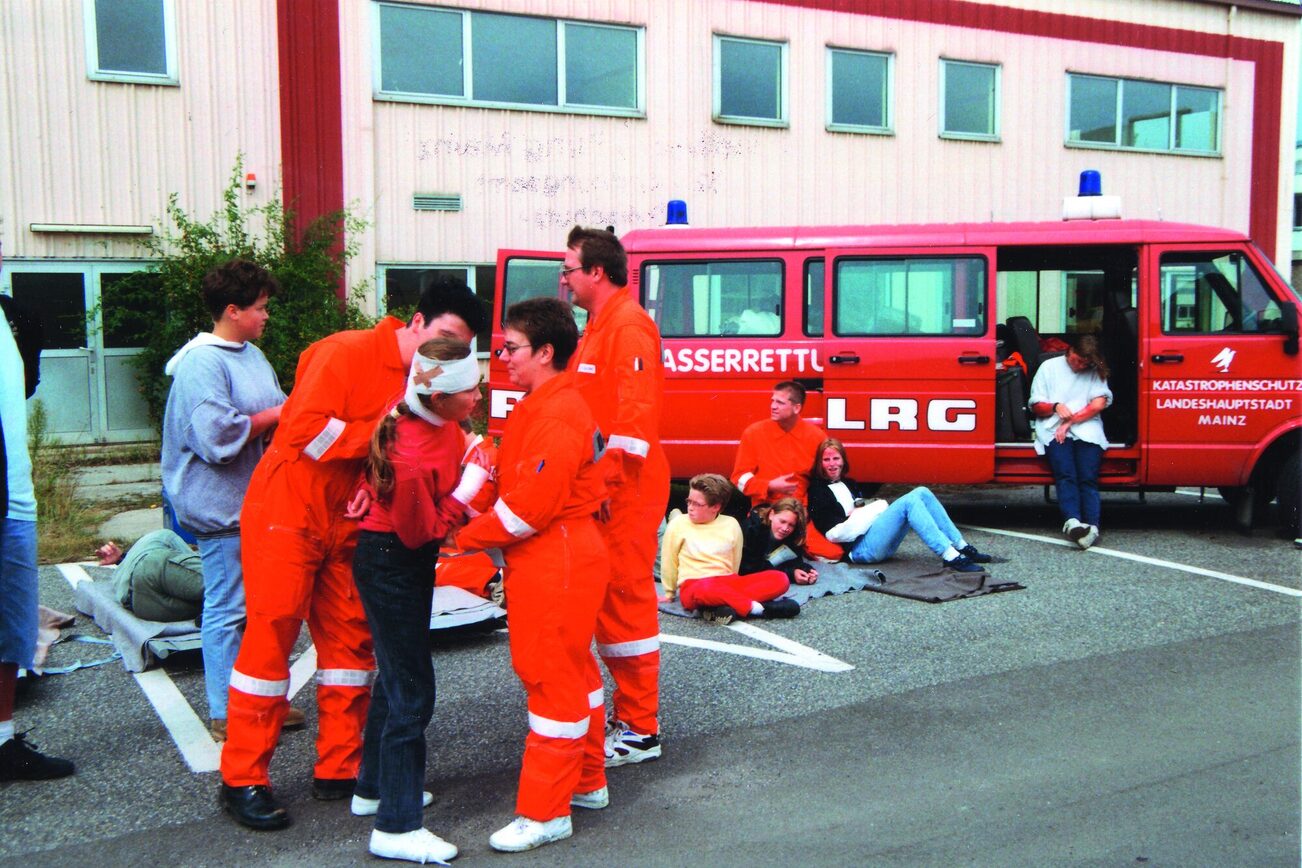
As part of the alarm and deployment plan for rescue and medical services (now RAEP Health), the state of Rhineland-Palatinate recommended in 1989 that a specially qualified senior emergency physician (LNA) and, later, an organizational manager (OrgL) be appointed to manage and coordinate medical operations at the scene of an emergency. Together, they form the health section management team.
For practical and financial reasons, the city of Mainz and the Mainz-Bingen district administration quickly agreed to set up this system jointly, so that the area of responsibility of the senior emergency physicians covers both the city and the district.
Starting in 2015, with the cooperation of the Alzey-Worms district administration and the Worms city administration, the health alarm and deployment plan was revised and extended to the Rhine-Hesse region. The aim of this plan is to perform tasks more effectively in the area of health care and support for injured and sick people.
On July 1, 1990, the first senior emergency physicians were appointed in Mainz, who were also the first senior emergency physicians in Rhineland-Palatinate. The group now consists of 13 physicians, all of whom are employed at the Clinic for Anesthesiology at Mainz University Medical Center.
The first organizational managers were appointed in 1994 (also the first in Rhineland-Palatinate). At that time, they were initially only responsible for the city of Mainz, but from 1999 onwards, they also worked with the district of Mainz-Bingen.
Since January 2007, both the senior emergency physicians and the organizational managers have been performing their duties as honorary officials of the city of Mainz and the Mainz-Bingen district.
For 20 years, from 1990 to 2009, training to become a senior emergency physician was provided by the Rhineland-Palatinate Academy for Continuing Medical Education in cooperation with the Department of Anesthesiology at Mainz University Medical Center. The final exercises, which involved many different, realistically depicted scenarios, also served as the city's annual disaster control exercises, during which the helpers were able to practice not only their own tasks but also cooperation with other specialist services. These exercises, some of which involved up to 500 participants, were the largest regular exercises of their kind in Germany.
In Mainz, a very efficient disaster control system developed in the 1990s, while traditional civil defense tasks took a back seat.
As part of the disaster control planning in the vicinity of the Biblis nuclear power plant, the city of Mainz was asked to plan a so-called emergency station, among other things. In the event of an accident involving the release of radioactivity, this station is intended as a contact point for people suspected of being contaminated. Here, people can be checked for possible contamination, decontaminated by washing or showering if necessary, and ultimately advised by doctors and other experts on whether and, if so, what further measures are necessary. The IGS Bretzenheim in Mainz is designated as such an emergency station. On October 2, 1990, the procedures were tested in a corresponding exercise. The extent to which the emergency station is still needed following the German government's recent decisions on phasing out nuclear power and limiting the operating life of nuclear power plants is currently unclear.
In the early 1990s, a lively professional exchange developed with colleagues in our twin city of Erfurt. There, they faced the difficult task of implementing civil protection and disaster control structures in Erfurt, with which they were largely unfamiliar. The city of Mainz provided support to the best of its ability, and it was also interesting to learn about the structures in the former GDR.
Between 1991 and 1996, the St. John Rescue Corps Malta, an organization of the Order of St. John, was also supported in setting up an aid group in Malta comparable to the disaster control units in Germany. During three stays, in which helpers, future trainers, and managers took part in courses at the Federal Disaster Management School in Ahrweiler as well as practical exercises in Mainz, around 100 people were trained.
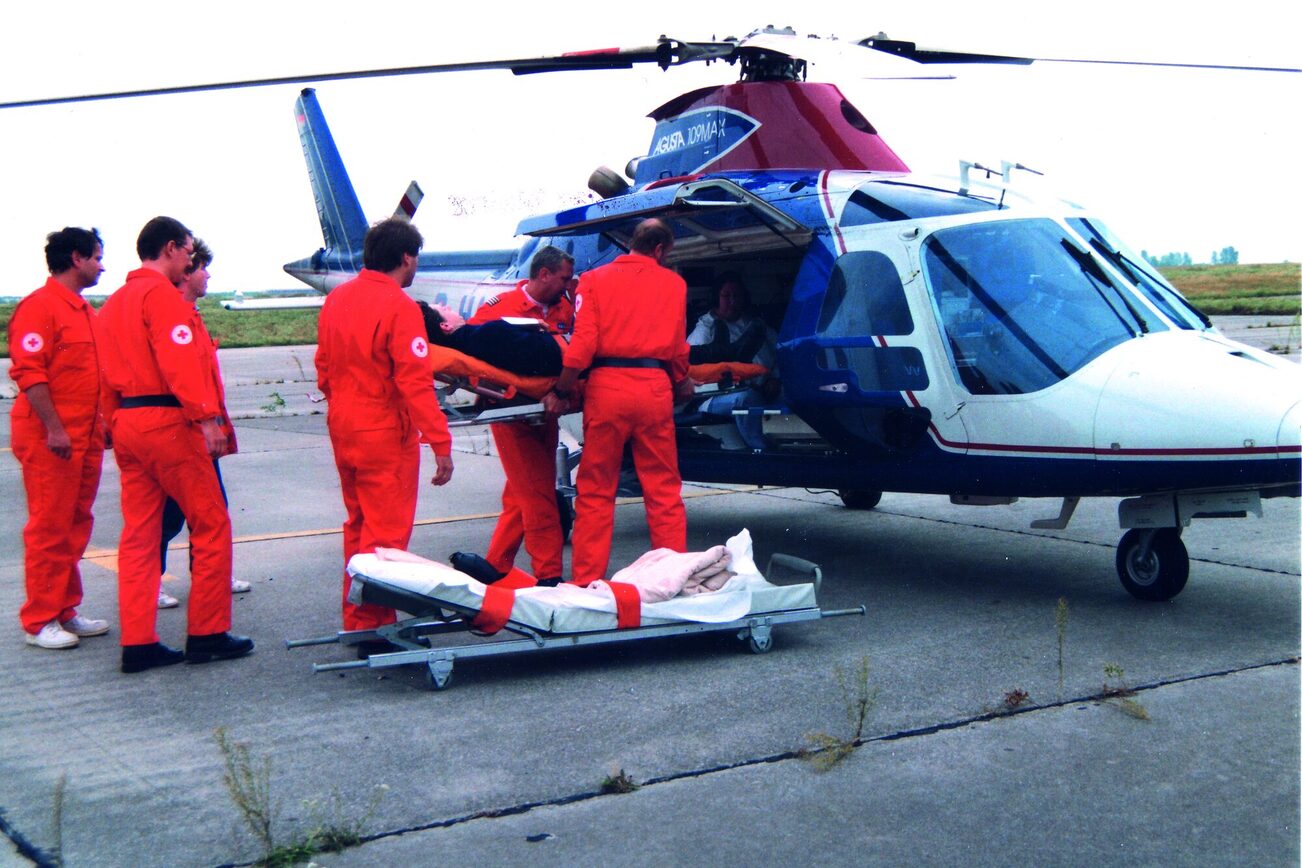
2000s until today
During these years, civil protection and disaster control underwent constant change, which also had an impact on Mainz.
The federal government further modified its strategy for supporting the states in the context of expanded disaster control, due to the lack of a military threat on the one hand and new terrorist threats on the other.
Since then, support has been provided:
- as a core element in the areas of mass casualties and CBRN hazards (chemical, biological, radiological, and nuclear hazards) through standardized equipment and, in a next stage, through so-called task forces, which are intended for supra-regional assistance
- as a support component in fire protection, medical and care services
The city of Mainz is to receive one or two vehicles from this pool. Currently, there are still seven federal vehicles available in Mainz, out of the 33 vehicles that were available in the 1980s. As the municipalities are unable to compensate for this deficit on their own due to the generally difficult financial situation, the state has set up a subsidy program since 2007, whereby 40% of the cost of vehicles for medical, care, and catering services is subsidized by the state. The city purchased its first vehicle in 2010, with two more to follow this year and next.
Since the accident in Ramstein, the need for qualified psychosocial care for both those affected and those providing assistance has been recognized and gradually established. In 2000, a crisis intervention team consisting of appropriately trained paramedics was founded in Mainz.
Almost at the same time, the Ecumenical Emergency Pastoral Care was formed, a group of around 25 Protestant and Catholic pastors who are commissioned by their churches for this service and ensure 24-hour on-call availability. They accompany and support people in acute personal emergencies and are responsible for providing human and pastoral care and support. If necessary, they refer those affected to further adequate professional help and initiate the first steps in this direction.
The German Armed Forces, with its personnel and material resources, is also available for larger disaster relief operations, taking into account its other diverse tasks. In the past, the structures within the German Armed Forces, the responsibilities, and the contact persons were often not transparent to the civil authorities. This changed in 2006 when a so-called district liaison command (KVK) was set up for each district and city administration, each consisting of 10-12 experienced reservists familiar with the local area who act as contact persons for all questions relating to civil-military cooperation. In particular, they are responsible for informing and advising the disaster control headquarters and/or the administrative staff in Mainz about the Bundeswehr's assistance capabilities during operations and exercises, and for coordinating military support if necessary. The good personal contact between the disaster control staff in Mainz and the members of the KVK is a great advantage in this regard.
In 2007, the federal government decided to officially abandon the shelter concept. Since then, maintenance and repair work on the six shelters in Mainz has been discontinued. The only exceptions are works that are absolutely necessary in order to comply with traffic safety regulations. As a result, none of the facilities are now functional as shelters; they are used exclusively as underground parking garages.
Professional pressures on many helpers, but also a lack of equipment for cost reasons, meant that the operational readiness of the four rapid response medical teams could no longer be guaranteed at all times.
Closer cooperation between the organizations was absolutely necessary, so that now two organizations (ASB/JUH and DRK/MHD) each provide a rapid response team. This prompted the decision to extend the excellent cooperation with the Mainz-Bingen district administration in maintaining the senior emergency doctor group and the organizational management group to the rapid response medical teams as well – because with two rapid response medical teams in the district, the previous safety standard could be maintained. The health alarm and deployment plan, which was drawn up jointly by both administrations, comprehensively regulates medical, rescue, medical, and care services.
With the federal government's decision to suspend military and civilian service as of July 1, 2011, the obligation to provide disaster relief as a substitute for these services has also become obsolete. For some helpers, this has removed the incentive to participate in disaster relief. Our three management units, which consisted largely of volunteers exempted from military or civilian service, therefore had to cease their activities on July 1, 2011. Whether at least the telecommunications service (now Information and Communication – IuK) and the supply service can continue with volunteer helpers is currently being examined.
Although the impact on aid organizations is not expected to be as severe, it will take some time before more details are available. However, it can generally be assumed that not all voluntary services will be able to continue to the same extent.
Communication capabilities are often a source of criticism during operations or exercises. With the introduction of digital radio, this should soon be a thing of the past. Preparations have been in full swing in Rhineland-Palatinate since 2007. The cost of disaster control, including the fire department, amounts to around €110,000 in Mainz, with a state subsidy of 50% already taken into account. As part of this changeover, the siren triggering devices must also be converted to digital technology.
From October 1, 1995, to March 31, 2015, civil protection and disaster control tasks were performed by the Public Order Office and later by the Legal and Public Order Office. The former civil protection department was renamed the civil protection department in 2007. The term "civil protection" reflects the increasingly close link between civil protection and disaster control to form a joint assistance system for the protection of the population, both in the event of damage in peacetime and in the event of defense.
Since April 1, 2015, the Mainz Fire Department has been responsible for civil defense and disaster control.